Burns, blistering, ingrown hairs, acne-like bumps, dark patches and disappointing hair reduction need different explanations and treatments. You will learn how to identify warning signs, prepare for a hair removal consultation, compare treatment technologies and judge whether a dermatologist can address an underlying medical cause.
Key takeaways
- Blistering, pus, severe pain or fever needs prompt medical assessment.
- Ask about your skin type, hair colour, treatment area and laser wavelength.
- Protect treated skin from sun and follow the clinic’s aftercare instructions.
- Choose a Nashik dermatologist who explains risks, settings and follow-up care.
Is the reaction normal, or has hair removal caused a complication?
A few hours of perifollicular redness and swelling after laser can be normal; blistering, crusting, severe pain, pus, spreading redness, fever, eye exposure, rapidly worsening pigmentation, or a raised scar is a complication needing prompt medical assessment. Persistent pale or dark patches can indicate thermal injury and post-inflammatory hyperpigmentation or hypopigmentation.
- Record the timing. Burning, swelling or blisters appearing immediately after laser suggest excessive heat; waxing or threading can cause surface redness, skin lifting and crusting within hours. Razor shaving and epilation more often cause cuts, folliculitis, ingrown hairs or acne-like bumps over the next few days. Depilatory cream can produce burning or dermatitis soon after application, especially if left on too long.
- Check the pattern. Pus, tender follicle-centred bumps and spreading redness suggest infection or folliculitis. Hair trapped beneath the skin points to ingrown hairs; a firm, enlarging raised mark suggests scarring. Little or no reduction after appropriately spaced laser sessions needs review, while denser or coarser facial or neck hair after laser or IPL may be paradoxical hypertrichosis.
- Bring the treatment history. Note the method, date, device or product, treatment area, settings if known, recent tanning, and every cream or medicine used afterward. Sudden facial hair with irregular periods, acne, scalp thinning, voice deepening or increased muscle mass needs assessment for hormonal causes rather than repeated cosmetic treatment.
If you are searching for best female dermatologist hair removal for problems in Nashik, choose a qualified dermatologist who examines the reaction and offers follow-up, not a ranking alone.
What does a dermatologist check during a hair removal consultation?
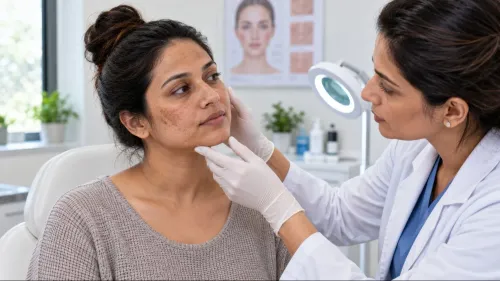
A proper hair removal consultation checks your health and hair growth before anyone chooses a device or applies treatment.
The clinician records medical history, menstrual and pregnancy status where relevant, medications, recent tanning or sun exposure, active skin disease, previous hair-removal methods, scarring or keloid tendency, treatment areas, hair colour and thickness, and the results of earlier sessions.
The examination distinguishes ordinary unwanted hair from hirsutism: coarse, dark growth in androgen-sensitive areas such as the chin, upper lip, chest or abdomen.
Sudden or rapidly progressive facial hair, irregular periods, acne, scalp-hair thinning, a deepening voice or increased muscle mass can justify evaluation for polycystic ovary syndrome, thyroid disease, medication-related excess hair or, rarely, a hormone-producing tumour. Hair removal will not correct that underlying driver.
- Treat active infection, dermatitis, burns or severe irritation before hair removal; immediate treatment can worsen inflammation and pigmentation.
- Request examination, referral or blood tests when excess hair accompanies hormonal symptoms, rather than proceeding with a cosmetic plan alone.
- Discuss earlier burns, blistering, folliculitis, ingrown hairs, pigment changes, raised scars or poor reduction so the clinician can identify the likely cause.
- Ask for a test patch when your skin is recently tanned, darker, highly reactive or previously injured, or when the device and settings are new to you. Review the patch response before treating the full area.
Which hair-removal technology suits your skin, hair and treatment area?
A triple-wavelength label is not automatically the best choice. It commonly means approximately 755-nm alexandrite, 810-nm diode and 1,064-nm Nd:YAG, but it does not reveal fluence, pulse duration, spot size, cooling or operator skill.
| Option | Best fit | Trade-offs |
|---|---|---|
| 755-nm alexandrite | Lighter skin with coarse, dark hair; legs or underarms | Fast and effective, but higher burn and pigmentation risk in darker or tanned skin |
| 1,064-nm Nd:YAG | Darker skin requiring cautious treatment; larger body areas | Lower epidermal melanin absorption, but settings and cooling remain critical |
| Diode-only laser | Dark hair on face or body across selected skin types | Results depend on wavelength, fluence, pulse duration and technique, not the word “diode” |
| IPL | Broad body areas when the device and filter suit your skin | Not a laser; irritation and pigment risk vary widely by settings and operator |
| Electrolysis | Individual grey or white hairs, including small facial areas | Slow for large areas, but it targets hairs that lack enough melanin for laser |
| Waxing, threading or shaving | Temporary facial or body maintenance | Waxing irritates and can trigger ingrowns; threading suits small areas; shaving is quickest |
| Depilatory cream | Small areas without broken or sensitive skin | Chemical irritation or burns can occur if left on too long |
Grey, white, red, blonde and very fine hairs respond poorly to laser. Hormonal excess hair needs medical assessment, not repeated cosmetic sessions.
At-home IPL is not equivalent to clinic laser: it uses lower-energy broad-spectrum light and lacks clinical assessment. Before booking laser hair removal treatment in Nashik or triple wavelength hair removal in Nashik, ask:
- Which wavelength, fluence, pulse duration, spot size and cooling system will you use?
- What training and regulatory status does the device and operator have?
- Why does this option suit my skin, hair and treatment area?
What results and aftercare should you expect from laser treatment?
Laser hair removal gives long-term hair reduction, not guaranteed permanent removal. The laser works best when melanin in the hair absorbs its energy, and follicles respond most reliably during the anagen, or active-growth, phase.
Because follicles enter this phase at different times, you need several sessions spaced around the area’s growth cycle; maintenance sessions may be needed when new growth appears.
1. Expect better reduction from coarse, dark hair than from fine, blonde, red, grey or white hair. Discuss paradoxical hypertrichosis before treating fine facial or neck hair: this uncommon complication can make hair denser or coarser after laser or intense-pulsed-light treatment.
2. Avoid tanning before treatment and use broad-spectrum sun protection. Do not wax or pluck the target area shortly beforehand because the follicle must remain available as the treatment target. Shave when instructed, and postpone treatment if the skin is irritated, infected or sunburned.
3. Temporary perifollicular redness and small areas of swelling are common immediately afterward. Seek medical review for blistering, crusting, severe pain, marked swelling, pus, spreading redness or persistent light or dark patches; thermal injury can cause post-inflammatory hyperpigmentation or hypopigmentation, especially in darker or recently tanned skin.
4. Confirm that settings are chosen from your skin phototype, tanning history, hair thickness and colour, wavelength, fluence, pulse duration, spot size and cooling—not skin colour alone. Poor selection can injure the epidermis while failing to disable the follicle.
How do you choose a dermatologist for a hair-removal problem in Nashik?
Yes—the best female dermatologist in Nashik can help with a hair-removal problem when she has a recognised dermatology qualification, experience with your skin type and complication, suitable equipment, documented consent, and a follow-up or referral plan. Gender and online rankings do not prove clinical quality.
A female dermatologist can still be the right choice for privacy, comfort, or examination of intimate areas.
If you search for the best female dermatologist hair removal for problems in Nashik, ask:
- What caused the reaction: laser, IPL, waxing, threading, shaving, epilation, cream, infection, or an underlying condition?
- Does the burn, folliculitis, pigmentation, scar, or excess hair need treatment before further removal?
- Which wavelength or alternative is being chosen, and why does it suit your skin phototype, hair colour and treatment area?
- How many sessions are expected, how far apart will they be, and could maintenance be needed?
- Which adverse effects require urgent review, and who will manage them?
- Who provides follow-up if pigmentation, blistering, paradoxical hair growth, or scarring develops?
| Check | Evidence to request | Why it matters |
|---|---|---|
| Qualification | Dermatology registration and recognised specialist training | Confirms clinical preparation |
| Equipment | Wavelength, cooling, settings and test-patch plan | A device label alone proves little |
| Care process | Written consent, aftercare and referral pathway | Prevents rushed treatment |
If you assess Dr. Shreeya: Consultant Dermatologist in Nashik, apply these checks rather than accepting a service label as proof of suitability.
Related service
Cosmetic Dermatology (Aesthetic Medicine) Triple Wavelength Hair Removal Triple Wavelength Hair Removal View service → |
Frequently asked questions
Is redness after laser hair removal normal?
A few hours of perifollicular redness and swelling can be normal. Blistering, crusting, severe pain, pus, spreading redness, fever, eye exposure, rapidly worsening pigmentation or a raised scar needs prompt medical assessment.
What does a dermatologist check during a hair-removal consultation?
A dermatologist reviews your skin type, hair colour and thickness, treatment area, medical history, medicines, previous hair-removal reactions and any signs of infection, burns or pigment change.
How do you choose hair-removal technology?
The choice depends on your skin tone, hair colour and thickness, treatment area, and the clinician’s assessment. Ask why a specific laser or triple-wavelength system suits your features.
What results and aftercare should you expect from laser hair removal?
Laser treatment reduces hair progressively rather than removing every hair in one session. Follow instructions on sun protection, shaving, skincare products, heat and follow-up appointments.
How do you choose a dermatologist for hair-removal problems in Nashik?
Choose a qualified dermatologist who examines complications, explains treatment settings and risks, uses appropriate eye protection, documents your response and provides clear follow-up instructions.
Keywords