The right treatment depends on whether you are shedding hair temporarily, losing density gradually, developing bald patches, or experiencing scalp inflammation that can destroy follicles. By the end, you will know which findings require prompt assessment, which treatments match each diagnosis, and how to compare medical therapy with PRP or GFC before spending money.
Key takeaways
- Track shedding, thinning pattern and scalp changes before booking treatment.
- Ask for a scalp examination and diagnosis before choosing injections or medicines.
- Choose treatment based on the cause, not hair fall alone.
- Judge progress with consistent photographs and a realistic treatment timeline.
Is this excessive shedding or progressive hair loss?
Before choosing hair fall treatment in Nashik, identify whether you are losing more hair than usual or losing follicles progressively. The timing, distribution and scalp appearance provide useful clues.
| Pattern | What you may notice | What it suggests |
|---|---|---|
| Telogen effluvium | Increased shedding appearing several months after fever, major illness, surgery, severe stress, childbirth or marked weight loss | A delayed shedding response to a trigger |
| Androgenetic alopecia | Gradual thinning at the hairline, crown or central part | Progressive pattern hair loss |
| Alopecia areata | Sudden, smooth bald patches; eyebrow loss or nail changes may occur | An autoimmune condition |
| Traction alopecia | Hair loss along areas repeatedly pulled by tight braids, ponytails, extensions or helmets | Pull-related follicle damage |
| Inflammatory or scarring alopecia | Pain, burning, itching, redness, scale, pustules or tenderness; shiny skin appears where follicle openings have disappeared | Inflammation that can permanently destroy follicles |
Seek prompt dermatology care for rapid shedding, patchy loss, eyebrow loss, scalp pain or scaling, scarring, or hair loss after a medication change, illness or childbirth. A dermatologist can separate telogen effluvium from conditions needing anti-inflammatory or other treatment; waiting while inflammation progresses can leave permanent loss.
What happens during a proper hair-loss diagnosis?
A proper consultation starts with a diagnosis, not a fixed hair package. At a skin clinic in Nashik for hair loss treatment, the dermatologist will ask when shedding began, about fever or illness, surgery, severe stress, childbirth, weight loss, family pattern, itching or pain, diet, periods or pregnancy, and previous treatments.
They will review every prescription, over-the-counter medicine, supplement and recent medication change.
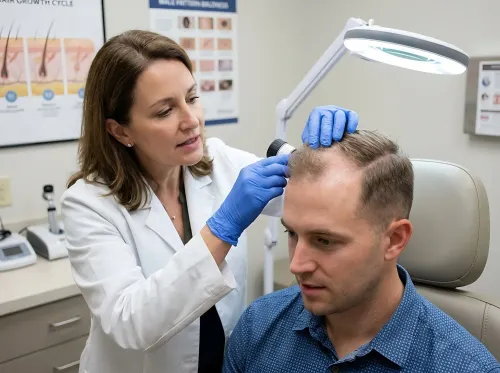
A hair specialist doctor in Nashik should examine the scalp and hair shafts for density, breakage, scaling, redness, pustules and shiny areas. A hair-pull test estimates active shedding, while dermoscopy or trichoscopy assesses follicle openings, miniaturisation, broken hairs and inflammation.
Tests are targeted, not automatic.
- CBC, ferritin or iron studies, TSH, vitamin B12, vitamin D and selected hormonal tests fit the evaluation when your history or examination suggests deficiency, thyroid disease or an endocrine problem. Indiscriminate hair panels can produce incidental results.
- A scalp biopsy can be needed when scarring alopecia is suspected, especially with pain, burning or missing follicle openings, or when an inflammatory condition remains unclear. Delaying assessment risks permanent follicle loss.
At Dr. Shreeya: Consultant Dermatologist, ask three practical questions:
- What diagnosis explains the loss?
- What evidence supports the proposed treatment?
- When will photographs or another measure be reviewed?
Related services
Clinic Dermatology Hair Loss Management And Treatment Hair Loss Management And Treatment View service → |
Cosmetic Dermatology (Aesthetic Medicine) PRP and GFC for Hair Fall Treatment PRP and GFC for Hair Fall Treatment View service → |
Which medical treatment matches your diagnosis?
Observation or trigger-based care makes more sense when shedding began several months after fever, major illness, surgery, severe stress, childbirth or marked weight loss. Telogen effluvium improves by addressing the trigger and correcting a documented deficiency; judge progress over months, not days. Do not take iron, vitamin D or other supplements without evidence of deficiency.
| Diagnosis or finding | Treatment that fits | What to expect |
|---|---|---|
| Pattern hair loss | Topical minoxidil; prescription finasteride mainly for appropriate male pattern hair loss | Early temporary shedding can occur. Visible minoxidil benefit often takes 6–12 months, and stopping can cause renewed loss. Discuss finasteride’s sexual and mood-related adverse effects. It is prohibited during pregnancy and must not be handled as crushed or broken tablets by pregnant people. |
| Pattern hair loss needing another option | Off-label oral minoxidil | Review blood pressure, heart history and interacting medicines first. Risks include excess facial or body hair, ankle swelling, fast heartbeat, dizziness and low blood pressure. |
| Alopecia areata | Prescribed corticosteroid injections or topical or systemic medicines | Treatment must target autoimmune inflammation; minoxidil alone does not treat the cause. |
| Active scalp inflammation | Disease-specific scalp treatment | Treat infection, dermatitis or another inflammatory disorder before considering a procedure. |
A dermatologist hair loss treatment in Nashik should match the diagnosis, not sell every patient injections. For hair fall treatment in Nashik, ask what evidence supports observation, scalp treatment, medicine or nutritional correction before paying for a procedure.
Should you choose PRP or GFC for hair loss?
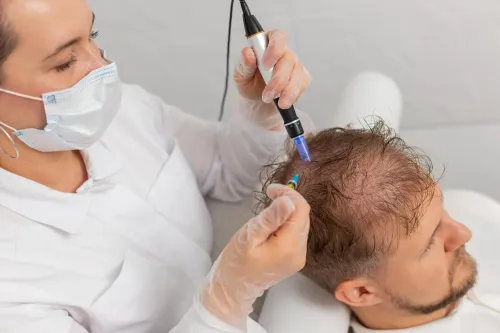
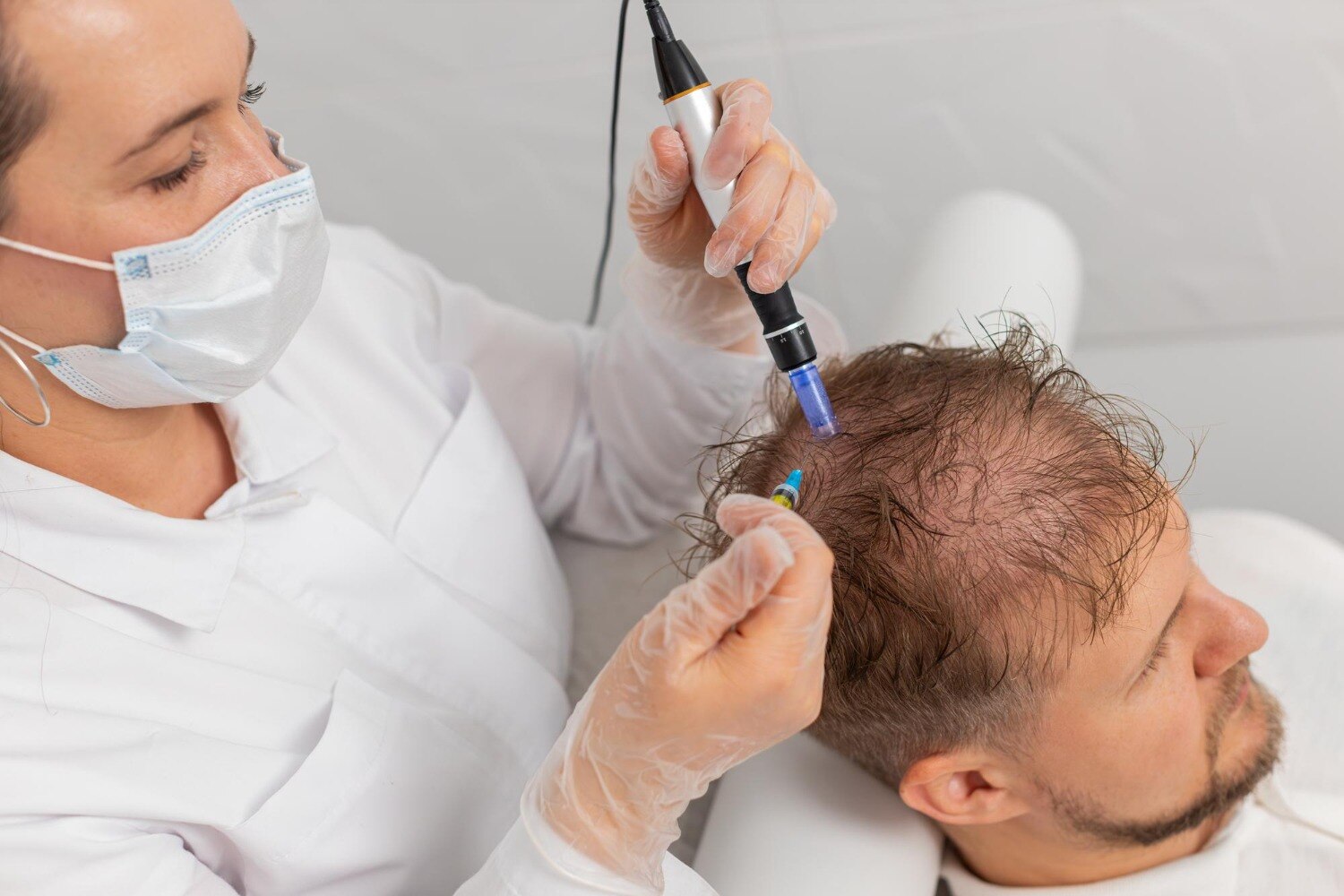
Neither PRP nor GFC is automatically the better choice: the diagnosis, preparation method and follow-up plan matter more than the label. PRP uses a blood sample spun to concentrate platelets. GFC uses a prepared growth-factor fraction from the patient’s blood.
| Option | Practical difference | Main trade-offs |
|---|---|---|
| PRP | Platelet concentrate injected into the scalp | Possible density improvement, but protocols and evidence vary |
| GFC | Prepared growth-factor fraction injected into the scalp | Preparation quality and processing method strongly affect comparability |
| Both | Usually a series of scalp injections | Repeated appointments, tenderness, small injection-site swelling and limited downtime |
Ask exactly how the sample is collected, which tube and processing method are used, whether activation occurs, how deeply injections go, how many sessions are planned, and what maintenance schedule follows. Cost reflects equipment, clinician time and session count, not simply the product name.
PRP research suggests possible hair-density improvement, but studies use inconsistent platelet concentrations, schedules and outcome measures. Before paying, ask how success will be measured—standardised photographs, hair counts or dermoscopy—and when treatment failure means changing course. This matters when comparing dermatologist hair loss treatment in Nashik or hair fall treatment in Nashik.
Do not choose injections first for scarring alopecia, active infection, untreated thyroid or iron deficiency, pregnancy-related shedding, alopecia areata needing anti-inflammatory treatment, or advanced long-standing follicle loss. Injections cannot revive follicles permanently destroyed by scarring. A dermatologist should treat the cause before discussing PRP or GFC.
How should you judge results and know when to change course?
Do not judge treatment by today’s hair count. Separate the goal before deciding whether it worked.
| Goal | Realistic result | What it cannot do |
|---|---|---|
| Reduce shedding | Fewer hairs lost after the trigger or disease is controlled | Guarantee immediate regrowth |
| Thicken miniaturised hairs | Existing weak follicles produce visibly stronger hairs | Reverse every stage of pattern loss |
| Restore destroyed follicles | Medical treatment cannot revive follicles permanently destroyed by scarring | Transplantation can only redistribute surviving donor follicles |
For a skin clinic in Nashik for hair loss treatment, take baseline photographs from the front, both temples, crown and part line. Use the same lighting, distance, hairstyle and camera position each time. Reassess at the interval suited to the treatment—often 6–12 months for minoxidil—not by comparing daily shedding.
Use a simple follow-up rule: if photographs show stabilisation or thickening at the agreed review, continue; if loss worsens or there is no objective improvement, review the diagnosis, disease activity, adherence and adverse effects before changing treatment. Dermatologist hair loss treatment in Nashik may require maintenance.
When prescribed, minoxidil or finasteride can lose their benefit after stopping, allowing renewed pattern loss.
Consider transplantation only in a selected, stable case. It redistributes donor follicles, does not stop miniaturisation of native hair, and requires donor-density and future-loss assessment first.
Diagnosis and disease activity come before price, convenience, procedure packages or promises of guaranteed regrowth.
Frequently asked questions
How can you tell excessive shedding from progressive hair loss?
Excessive shedding often follows a trigger and affects the whole scalp, while progressive hair loss creates a widening part, receding hairline or patterned thinning. Timing, distribution and scalp appearance help distinguish them.
What happens during a proper hair-loss diagnosis?
A dermatologist reviews your timeline, family history, illnesses, medicines and diet, then examines the scalp and hair pattern. They may recommend blood tests when symptoms suggest thyroid disease, iron deficiency or another underlying cause.
Which medical treatment matches a hair-loss diagnosis?
Treatment depends on the cause. A dermatologist may address nutritional or hormonal problems, inflammation, infection, pattern hair loss or a temporary shedding trigger with targeted medicines and scalp care.
Should you choose PRP or GFC for hair loss?
PRP and GFC are injection-based options that may support selected cases of pattern hair loss. Compare the preparation method, treatment schedule, evidence, cost and diagnosis before choosing either one.
How should you judge hair-loss results and know when to change course?
Use consistent photographs, track shedding and assess hair density over the agreed review period. Change course when the diagnosis is uncertain, side effects occur, or objective improvement does not match the expected timeline.
Keywords