Extra hair on your pillow or in the shower is not automatically a seasonal condition. You will be able to distinguish temporary shedding from breakage or progressive hair loss, identify warning signs, and know what a proper consultation in Nashik should include.
Key takeaways
- Seasonal shedding often follows illness, stress, childbirth, dieting, or iron deficiency.
- Patchy loss, scalp inflammation, or thinning eyebrows needs medical assessment.
- A clinician checks your history, scalp, hair pattern, and possible nutritional causes.
- Treat the identified cause and track shedding with consistent monthly photographs.
Is seasonal hair shedding temporary, or is it a medical condition?
Seasonal hair loss is not usually a separate diagnosis. A sudden increase in shedding often reflects telogen effluvium, when more follicles enter their resting phase after fever, dengue, COVID-19, another infection, major stress, surgery, childbirth, rapid weight loss, crash dieting, or iron deficiency.
The key clue is timing: shedding usually becomes noticeable two to three months after the trigger, not immediately.
| Pattern | What it usually means | What to do |
|---|---|---|
| Normal shedding | Roughly 50 to 100 hairs daily; washing frequency and hair length make counting unreliable | Watch overall density rather than counting every strand |
| Acute telogen effluvium | Diffuse shedding after a trigger; hair on the pillow or drain and a thinner ponytail | Correct the trigger and allow several months for density to return |
| Chronic telogen effluvium | Shedding continuing beyond about six months | Arrange reassessment instead of observing indefinitely |
A widening part, visible scalp, or clearly increased hair on your pillow or shower drain deserves assessment. Acute telogen effluvium often settles once the trigger is corrected, but visible regrowth is slow because hair grows gradually.
A hair specialist doctor can confirm whether the episode fits temporary telogen effluvium and check for iron deficiency, thyroid disease, patterned hair loss, scalp inflammation, or another cause. If you are searching for a hair specialist doctor seasonal hair loss in Nashik, choose assessment over assuming every increase is seasonal.
Which signs show that shedding is not simply seasonal?
Seasonal shedding is less likely when hair is breaking, thinning in a pattern, or disappearing in defined patches. Separate hairs falling from the root from shafts snapping midway: the treatment and urgency are different.
| Sign | More likely explanation | Clues to check |
|---|---|---|
| Root-level shedding | Telogen effluvium | Diffuse loss after fever, dengue, COVID-19, stress, surgery, childbirth, crash dieting, or illness, often after a two-to-three-month delay |
| Shaft breakage or traction | Hair-care damage | Short broken hairs, split ends, uneven lengths, rough texture, and damage after colouring, straightening, high heat, vigorous brushing, or tight hairstyles |
| Progressive thinning | Androgenetic alopecia or another disorder | A widening part, smaller ponytail, visible scalp, gradual change, or a family history of patterned balding |
| Smooth patches | Alopecia areata | Sudden, sharply defined bald areas without broken hairs |
| Inflamed or scarred loss | Infection or inflammatory or scarring alopecia | Pain, burning, pus, heavy scaling, crusting, or shiny scar-like skin |
Stop tight styles, repeated chemical treatments, high heat, and vigorous brushing when breakage or traction is present; changing these exposures becomes part of treatment. Diffuse thinning can also reflect thyroid disease, iron or nutritional deficiency, medication effects, or inflammatory scalp disease. Menstrual changes can point toward a different underlying diagnosis.
Arrange prompt assessment for rapidly worsening loss, eyebrow or eyelash loss, scalp inflammation, or patchy baldness. A hair fall specialist in Nashik should examine the scalp before calling these changes seasonal, because scarring can permanently destroy follicles.
What will a hair specialist doctor check during an assessment?
A useful consultation begins with a timeline, not a treatment recommendation. The clinician should ask when shedding began and review the preceding two to three months, because telogen shedding often follows a trigger with a delay rather than appearing immediately.
- Fever, dengue-like illness, COVID-19, or another infection
- Childbirth or surgery
- Psychological stress
- Rapid dieting, crash dieting, or inadequate food intake
- New medicines or supplements
- Menstrual changes
- Family history of patterned balding
- Hair-care practices, including tight hairstyles, colouring, straightening, heat, and vigorous brushing
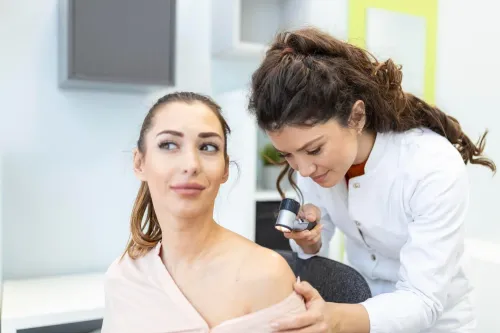
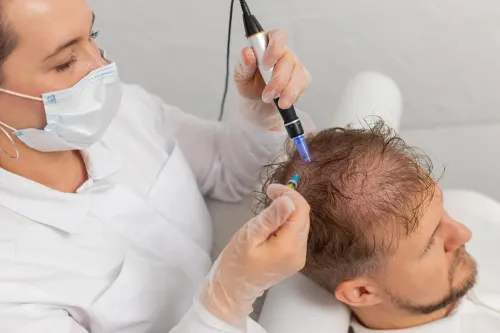
The scalp examination looks for diffuse shedding, miniaturised hairs, broken shafts, inflammation, and patchy disease. A gentle hair-pull test is useful when indicated, while dermoscopy or trichoscopy can reveal changes that are difficult to see with the naked eye.
These findings help a clinician plan hair loss treatment in Nashik based on the cause rather than on the amount of hair in your shower drain.
Blood tests should follow the history and examination, not follow an identical panel for everyone. Possible tests include a complete blood count, ferritin, thyroid-stimulating hormone, vitamin B12, or vitamin D when the clinical picture supports them.
Avoid indiscriminate hair vitamins: iron and vitamins help when deficiency is demonstrated or strongly suspected, while excess vitamin A, selenium, and some supplements can cause toxicity or worsen hair loss.
A request for stretch mark removal treatment in Nashik concerns dermal scars, not scalp follicles, so it needs a separate assessment.
What treatment is appropriate after the cause is identified?
Treatment should follow the cause, not the season. Correcting iron deficiency, thyroid disease, inadequate protein or calories, a medication effect, infection, or inflammatory scalp disease addresses the driver of shedding; minoxidil cannot do that. Minoxidil suits some forms, especially pattern hair loss, but it is not a universal answer for every seasonal episode.
Topical use can irritate the scalp or cause a temporary early increase in shedding. Ask for medical advice before using it during pregnancy or breastfeeding, and remember that its benefit lasts only while treatment continues.
| Option | When it applies | Important trade-off |
|---|---|---|
| Minoxidil | Selected pattern hair loss | Requires ongoing use; irritation and early shedding can occur |
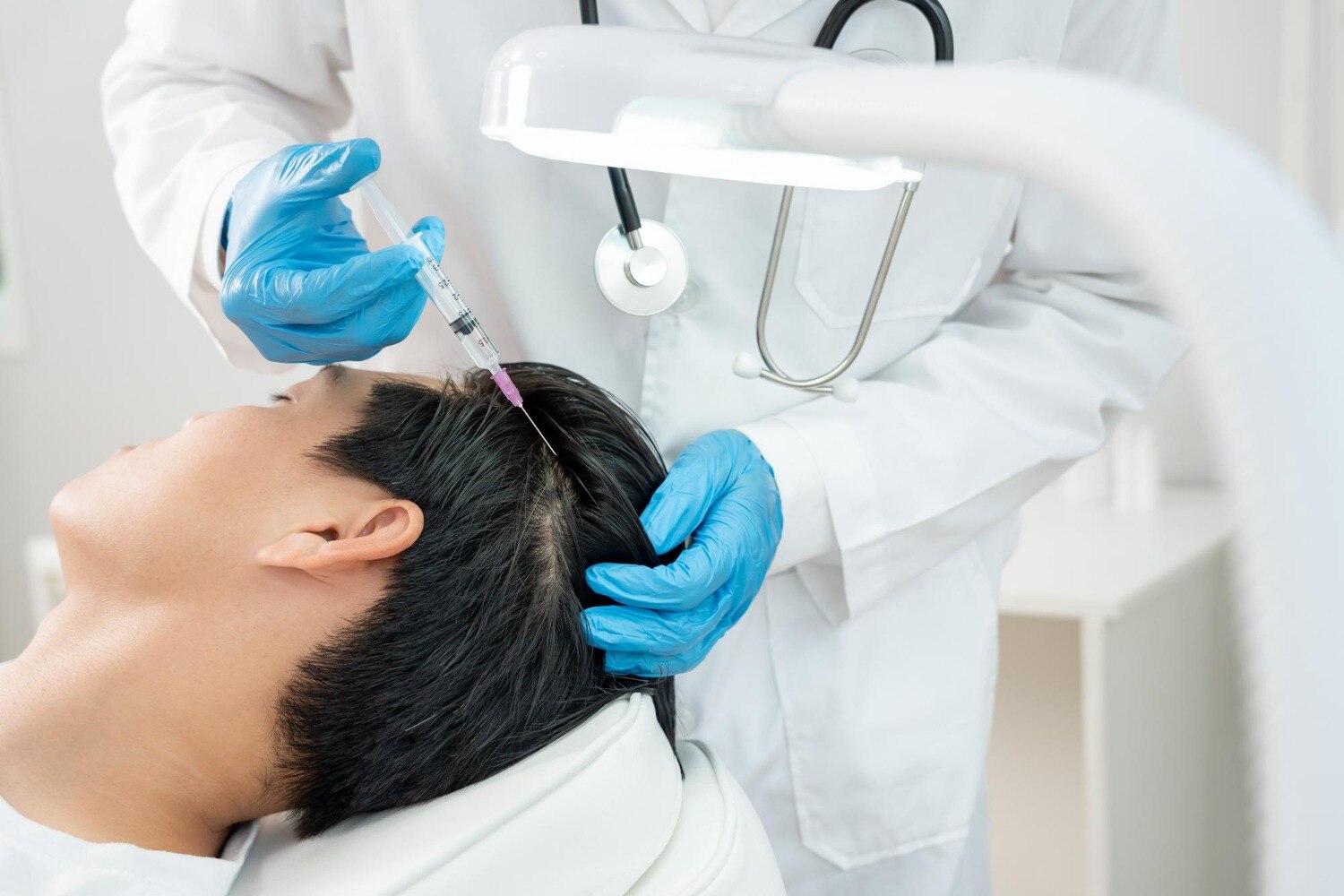
| Platelet-rich plasma | Some diagnosed hair-loss patterns | Cost, injections, maintenance, and evidence vary |
| Low-level light or microneedling | Selected cases after assessment | Results, risks, expense, and suitability vary |
| Supplements | Demonstrated or strongly suspected deficiency | Excess vitamin A or selenium can cause toxicity or worsen loss |
A clinician should explain these alternatives, uncertainty, adverse effects, maintenance, and realistic outcomes rather than promise guaranteed regrowth. This is what responsible hair loss treatment in Nashik should involve.
While waiting, eat adequate protein and calories, wash gently, treat dandruff, avoid tight styles and repeated heat or chemical treatments, and stop unnecessary supplements that could distort test results. Judge recovery in months, not days.
Stretch marks are separate dermal scars, not a scalp condition. Creams do not reliably erase them; procedures can improve texture or colour without guaranteeing complete removal, so stretch mark removal treatment in Nashik needs its own assessment.
How should you choose a local clinician and monitor recovery?
Choose a hair specialist doctor in Nashik who is a consultant dermatologist with hair and scalp experience. Ask whether the scalp will be examined, not judged from shedding alone, and which diagnosis is being considered before treatment is proposed.
Take these records to the appointment:
- Dates of fever, dengue-like illness, COVID-19, another infection, childbirth, surgery, major stress, or crash dieting
- A list of medicines and supplements, including recent additions
- Changes in menstrual cycles and any family history of patterned balding
- Photographs showing changes in your part or hairline
- Details of tight hairstyles, colouring, straightening, high heat, vigorous brushing, or other chemical treatments
Ask for baseline photographs or dermoscopic findings and a specific follow-up date. A hair fall specialist in Nashik should use the history and examination to decide whether targeted tests, observation, cause correction, or medication fits your findings.
| Monitoring method | What it shows | Main limitation |
|---|---|---|
| Daily hair counting | A rough change in shedding | Washing frequency and hair length distort the number |
| Standardised photographs | Part width, hairline, and visible scalp | Use the same lighting, angle, and hairstyle |
| Dermoscopy or trichoscopy | Miniaturised hairs, broken shafts, inflammation, or patchy disease | Requires clinical interpretation |
Dr. Shreeya: Consultant Dermatologist can be considered for a Nashik consultation that connects illness, diet, stress, medicines, and hair practices with examination and targeted testing.
Seek prompt care for smooth bald patches, eyebrow or eyelash loss, pus, pain, marked scaling, scarring, or rapidly worsening loss.
Related services
Clinic Dermatology Hair Loss Management And Treatment Hair Loss Management And Treatment View service → |
Hair Related Disorders (Greying Of Hair) Hair Related Disorders (Greying Of Hair) View service → |
Frequently asked questions
Is seasonal hair shedding temporary, or is it a medical condition?
Seasonal hair shedding is not usually a separate diagnosis. Increased shedding often reflects telogen effluvium, in which more follicles enter the resting phase after illness, stress, surgery, childbirth, rapid weight loss, crash dieting, or iron deficiency. It improves when the trigger is identified and addressed.
Which signs show that shedding is not simply seasonal?
Seek assessment for patchy bald spots, a widening part, receding hairline, rapidly worsening thinning, scalp pain, redness, scaling, pus, severe itching, or eyebrow loss. Arrange a consultation when shedding persists or follows a significant illness, restrictive diet, or unexplained weight loss.
What will a hair specialist doctor check during an assessment?
The clinician will review recent illness, fever, dengue or COVID-19, stress, surgery, childbirth, diet, medicines, family history, and the timing of shedding. They will examine the scalp and hair pattern, look for inflammation or scarring, and order blood tests when the history or examination suggests iron deficiency, thyroid disease, or another cause.
What treatment is appropriate after the cause is identified?
Treatment depends on the diagnosis. It can include correcting iron or nutritional deficiencies, treating scalp inflammation or infection, managing an underlying illness, changing harmful hair practices, or using prescribed treatment for pattern hair loss. Do not start high-dose supplements without confirming a deficiency.
How should you choose a local clinician and monitor recovery?
Choose a hair loss specialist in Nashik who examines the scalp, explains the likely diagnosis, and uses tests selectively. Record shedding, part width, and hairline photographs under the same lighting once a month, then review progress at the follow-up interval advised by the clinician.
Related services
Clinic Dermatology Dandruff Dandruff |
Cosmetic Dermatology (Aesthetic Medicine) PRP and GFC for Hair Fall Treatment PRP and GFC for Hair Fall Treatment View service → |
Keywords