A dark mark is not always tattoo ink, and uneven colour is not one diagnosis. You will learn how a dermatologist separates these problems, matches treatment to pigment and skin type, and assesses the time, risks and aftercare involved before you choose a clinic in Nashik.
Key takeaways
- Confirm whether the mark is tattoo ink or a pigmentation disorder.
- Ask how the tattoo’s colour, depth and age affect treatment.
- Expect multiple laser sessions and gradual fading, not guaranteed complete removal.
- Choose a dermatologist who examines your skin before recommending treatment.
Is the mark tattoo ink or a pigmentation disorder?
A mark’s shape and history often reveal more than its colour. Tattoo ink usually follows deliberate lines, shading or cosmetic brow contours and remains within the original design. A dermatologist examines it under suitable lighting, checks whether pigment sits in the skin’s surface or deeper layers, and uses dermoscopy when the diagnosis is unclear.
| Cause | Clues on examination | Why it matters |
|---|---|---|
| Tattoo ink | Defined design, multiple colours, stable outline, pigment within or below the skin | Laser wavelength depends on ink colour and depth |
| Melasma | Symmetrical brown patches on the cheeks, forehead, nose or upper lip | Heat and irritation can worsen it; laser is not automatically suitable |
| Post-inflammatory hyperpigmentation | Darkening exactly where acne, eczema, burns or injury healed | Treat the inflammation first |
| Freckles or lentigines | Small, separate brown spots on sun-exposed skin | Sun protection and diagnosis guide treatment |
| Nevus of Ota or vitiligo | Blue-grey pigment around the eye, or sharply lighter skin without pigment | These require condition-specific assessment, not tattoo removal |
The consultation should cover current medicines, pregnancy or breastfeeding when relevant, recent tanning, active infection, keloids or abnormal scars, and previous reactions to cosmetics or tattoo ink. Tell the clinician about itching or swelling after a red tattoo; laser can inflame previously quiet pigment.
Before choosing skin pigmentation treatment in Nashik or seeing a dermatologist in Nashik for tattoo removal, ask for a diagnosis and treatment rationale—not a peel or laser package based only on appearance.
Why tattoo colour, depth and age change the treatment plan
Black and dark-blue tattoo ink usually fades sooner because it absorbs commonly used laser wavelengths efficiently. Green, yellow, white and pastel pigments absorb or scatter different wavelengths, so one laser setting cannot break every colour equally well. Q-switched and picosecond lasers deliver short energy pulses, but the wavelength must still match the pigment.
Ink placed deeply or densely leaves more particles for your body to clear after each session. Professional tattoos often contain concentrated ink at a consistent depth; amateur tattoos can be uneven, yet neither category guarantees faster removal. Older tattoos may have faded, but age alone does not predict clearance because residual pigment can remain deep.
The plan changes further when the ink has these features:
- White, flesh-coloured and pastel inks can darken after laser exposure, especially when they contain titanium dioxide or iron-oxide compounds.
- Cosmetic tattoo pigments can behave unpredictably, so a test spot matters more than a generic removal promise.
- Red pigment can trigger itching or an allergic reaction after laser treatment; disclose any previous tattoo reaction.
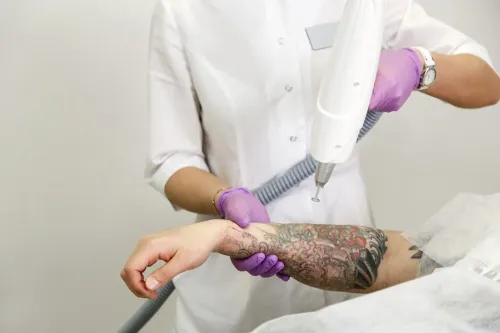
A proper course involves several sessions separated by healing intervals. If you are comparing tattoo removal treatment in Nashik, ask whether the clinician will test the exact ink colours and explain risks such as prolonged redness, blistering, infection, scarring and skin-colour changes. Complete clearance is not guaranteed.
What happens during a proper consultation and laser course?
A proper consultation begins with an examination under clear, suitable lighting, not a preselected package. The dermatologist identifies whether the problem is tattoo ink, post-inflammatory pigmentation, melasma, or another condition, reviews photographs of the area, and records its size, location, skin tone and previous treatments.
Bring details that can change the plan:
- Current medicines, pregnancy or breastfeeding status where relevant
- Recent tanning, active infection, or open skin
- Keloid or abnormal-scarring history
- Reactions to cosmetics, tattoo ink, peels, or previous lasers
- The tattoo’s approximate age, colours, depth, and any cosmetic tattooing
For tattoo removal treatment in nashik, ask for a test spot before treating the full area. The clinician uses the proposed wavelength on a small section, then checks how the ink and surrounding skin respond. This matters for white, flesh-coloured, or pastel ink, which can darken after laser exposure.
A test spot also helps set realistic energy levels and aftercare instructions.
Treatment is scheduled as a course, not a one-session erasure. Sessions are separated by healing intervals so the skin settles and the body can clear fragmented pigment; the exact interval depends on the device, site and reaction.
Dark tattoos may need several sessions, while dense, multicoloured or deep work can need more, and complete clearance is not guaranteed. If you are comparing a dermatologist near me, choose the clinic that explains the expected session range, risks and plan if pigmentation darkens.
Fading is not the same as complete removal
Expect gradual fading rather than guaranteed erasure. Tattoo ink is fragmented by Q-switched or picosecond laser pulses, then cleared by your body between sessions. Black and dark-blue ink often fades more predictably than green, yellow, white or pastel ink, while dense, deep or cosmetic ink can leave a residual outline.
- The treated tattoo may look darker immediately after treatment.
- Swelling, redness, blistering and crusting can occur during healing.
- The colour may return unevenly as deeper pigment clears.
- Complete clearance is not promised, and a faint shadow or texture change can remain.
Do not pick crusts or expose healing skin to strong sunlight. Skin tone changes, including temporary darkening or lightening, can follow both tattoo and pigmentation procedures; darker skin needs particular care because post-inflammatory hyperpigmentation can last longer.
Skin pigmentation treatment in Nashik is not a single treatment category. Melasma, post-inflammatory pigmentation, medication-related colour change and contact dermatitis have different causes, so the wrong peel or laser can worsen the mark instead of removing it. Melasma can also recur after successful improvement.
Tell the dermatologist about a previous reaction to tattoo ink, especially red pigment, because laser treatment can trigger renewed itching or inflammation. Delay treatment when the area has an active infection or recent tanning, and report pregnancy, breastfeeding, keloids or abnormal scarring before planning treatment.
How to choose a dermatologist in Nashik for safer treatment
Choose a dermatologist in Nashik for tattoo removal who diagnoses before selling a package. A dermatologist near me should explain whether the mark is ink, melasma, post-inflammatory hyperpigmentation, vitiligo or another condition, because a peel or laser can worsen the wrong problem.
At Dr. Shreeya: Consultant Dermatologist, ask who examines you and who operates the device.
- Which laser matches the ink’s colour, depth and density? Ask whether a Q-switched or picosecond device is appropriate, and why one wavelength will not treat every pigment equally.
- How many sessions and healing intervals are realistic? A course is normal, and complete clearance is not guaranteed.
- What could go wrong? Request an explanation of prolonged redness, blistering, infection, scarring, and temporary or permanent light or dark marks.
- What medical details change the plan? Discuss medicines, pregnancy or breastfeeding, recent tanning, active infection, keloids, abnormal scars, and reactions to cosmetics or tattoo ink.
- Who performs the procedure, what training do they have, and who handles a complication?
| Question | Reassuring answer | Warning sign |
|---|---|---|
| Diagnosis | A named condition supported by examination and photographs | “Laser for pigmentation” without identifying its cause |
| Laser and schedule | Colour-specific device, test spot, healing intervals and written expectations | One machine promised to remove every tattoo |
| Aftercare | Clear instructions for washing, sun protection, blister care and review | No written plan if skin darkens or blisters |
A low price is not a safety standard. Choose the clinic that gives informed consent before treatment, not after the first pass.
Related services
Cosmetic Dermatology (Aesthetic Medicine) Tatto Removal And Skin Pigmentation Tatto Removal And Skin Pigmentation View service → |
Clinic Dermatology Treatment for Skin Pigmentation & Related Disorders Treatment for Skin Pigmentation & Related Disorders View service → |
Frequently asked questions
How can you tell tattoo ink from a pigmentation disorder?
Tattoo ink usually follows deliberate lines, shading or cosmetic contours and remains within the original design. A dermatologist can assess the mark under suitable lighting and use dermoscopy when the diagnosis is unclear.
Why do tattoo colour, depth and age affect treatment?
Different ink colours absorb laser energy differently, while deeper or older pigment can require a different treatment plan and more sessions.
What happens during a tattoo removal consultation and laser course?
A proper consultation includes examination of the mark, assessment of pigment depth and discussion of the expected treatment course. Laser sessions are planned around the tattoo and your skin response.
Does tattoo fading mean complete removal?
No. Fading reduces the visibility of ink, but complete removal is not guaranteed. The final result depends on factors such as ink colour, depth, age and how your skin responds.
Related services
Cosmetic Dermatology (Aesthetic Medicine) Dermapen For Skin Rejuvenation Acne Scarring, Stretch Marks, Pigmentation Dermapen For Skin Rejuvenation Acne Scarring, Stretch Marks, Pigmentation View service → |
Clinic Dermatology Vitiligo Management View service → |
Cosmetic Dermatology (Aesthetic Medicine) Skin Rejuvenation Tightening Lasers Skin Rejuvenation Tightening Lasers View service → |
Keywords