Darkness around a tattoo is not always tattoo ink, and treating the wrong cause can worsen the colour change or leave you with avoidable scarring. You will be able to separate ink from pigmentation, assess the technology and risks, and decide whether a dermatologist’s qualifications and consultation process justify choosing her.
Key takeaways
- Ink follows tattoo lines; pigmentation often extends beyond them.
- Black ink responds differently from green, blue, red, and yellow ink.
- Seek review for blistering, spreading redness, pus, fever, or worsening pain.
- Choose pigmentation treatment after checking the cause, skin tone, and irritation risk.
Is the darkness tattoo ink, pigmentation, or both?
Ink stays inside the tattoo’s drawn shape; pigmentation often spreads beyond it or follows irritation. When the borders do not match, request assessment for both tattoo ink and a pigment disorder.
| Clue | More consistent with | Why it matters |
|---|---|---|
| Sharp, stable colour matching the design | Tattoo ink | Laser tattoo removal targets pigment deposited in the skin. |
| Brown or grey darkening around the tattoo after scratching, sun exposure, allergy, or a previous laser session | Post-inflammatory hyperpigmentation | Treating the surrounding pigment needs a separate plan; more laser can worsen it. |
| Symmetrical patches on the forehead, cheeks, upper lip, or jaw | Melasma | Heat, inflammation, and unsuitable laser settings can deepen it. |
| Small fixed spots on sun-exposed skin | Freckles or sunspots | These are assessed differently from tattoo ink. |
| Thick, darker skin on the neck, armpits, or groin | Acanthosis nigricans | Look for an underlying metabolic cause rather than using a tattoo laser. |
| Pale or completely white areas beside the darkness | Vitiligo or another lightening disorder | The contrast can make the tattoo look darker, but the pale skin requires separate evaluation. |
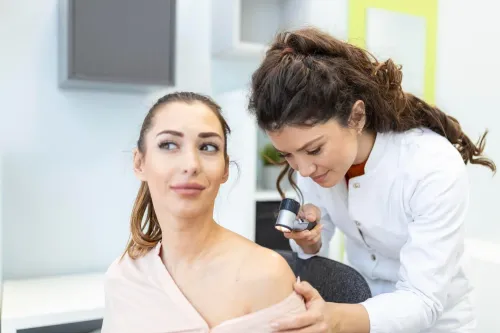
A dermatologist can compare old photographs, examine the border with dermoscopy, and ask when the colour changed, whether it itches, and what treatments touched the area. Do not apply bleaching creams or book tattoo removal in Nashik before identifying the surrounding pigment.
For pigmentation treatment in Nashik, ask for a plan that separates ink from post-inflammatory change and uses cautious settings for Indian skin.
Which tattoo colours and laser wavelengths affect the result?
Ink colour determines which laser wavelength can absorb it; ink depth and application method determine how much pigment remains for the body to clear. Q-switched and picosecond lasers fragment ink, but neither guarantees complete removal.
Professional tattoos often place pigment deeper and more densely than amateur tattoos, while scars, cover-ups, location, age and earlier treatment alter the response.
| Colour or situation | Common laser approach | What to expect |
|---|---|---|
| Black or dark blue | 1064-nm Nd:YAG | Usually the most predictable response, not necessarily complete clearance |
| Red, orange or some purple | 532 nm | Often responds, but pigmentary changes remain possible |
| Green, blue or mixed colours | Additional colour-specific wavelengths | More sessions and less predictable fading |
| Yellow, white or flesh-toned ink | Specialist assessment and test spot | Laser may work poorly or reveal darker pigment |
| Eyebrow, eyeliner or lip pigment | Test spot before full treatment | Iron oxide or titanium dioxide can turn darker or change colour |
Ask how deep the pigment is, which device and wavelength will be used, and whether the clinic has treated that colour before. A session spaced only a few days after the previous one does not speed clearance; treatments are commonly separated by several weeks so the skin heals and the immune system removes fragmented ink.
Before choosing tattoo removal in Nashik, ask for a realistic improvement range, expected session count, total cost, downtime and a plan if the tattoo darkens or stops responding. A guaranteed date, “100% removal,” or one-session cure is a warning sign.
Protect healing skin from sunlight and follow wound-care instructions, because temporary redness, blistering, pigment changes, infection and scarring can occur.
What happens during tattoo removal, and which reactions need review?
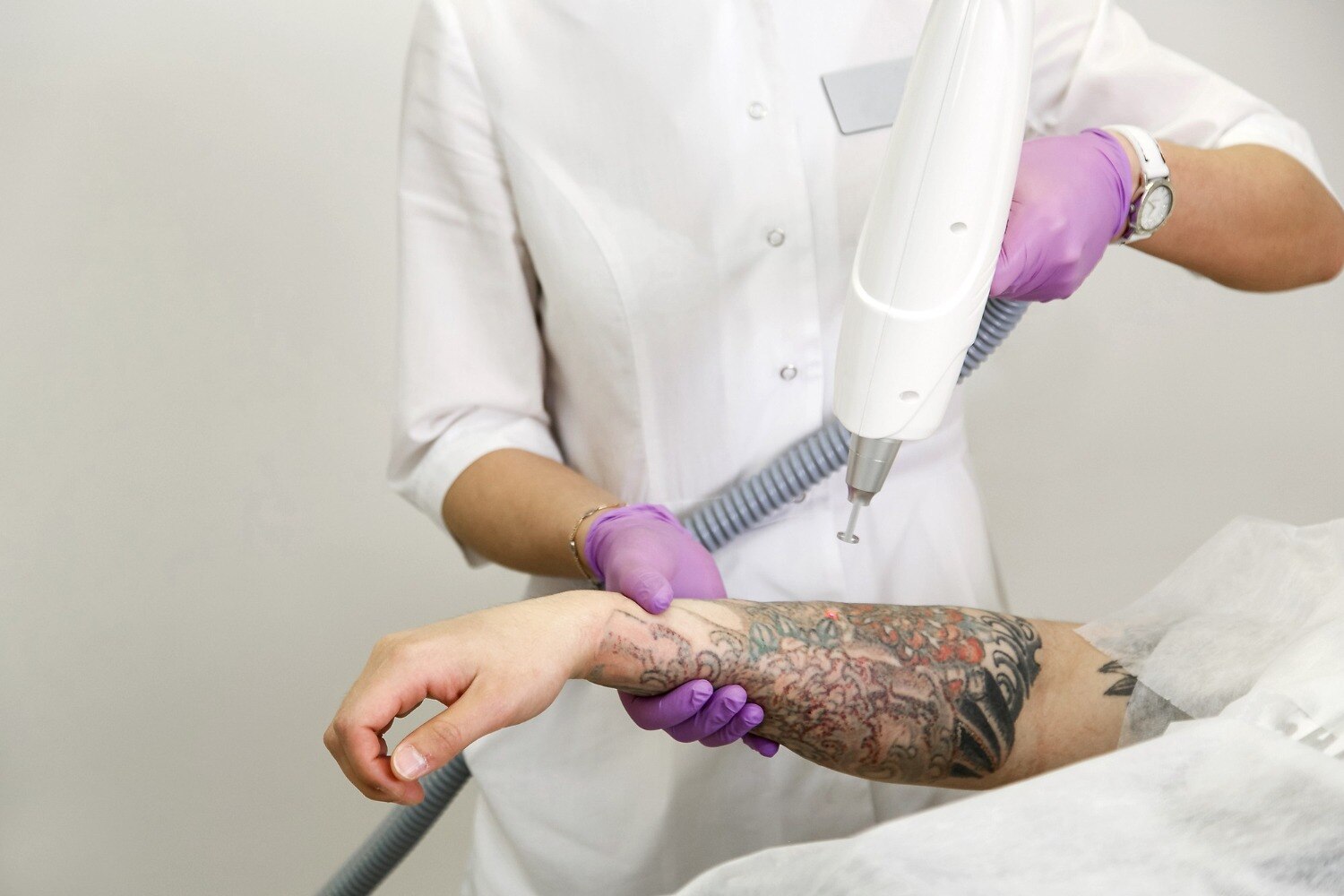
A tattoo-removal appointment starts with photographs, a skin examination, eye protection, and a discussion of the laser wavelength, test spot, session spacing, and aftercare. Q-switched or picosecond pulses feel like hot snaps against the skin; cooling and a topical anaesthetic can reduce discomfort.
Do not expect the tattoo to disappear immediately: pigment fragments are cleared over several weeks, so tattoo removal in nashik is usually a course rather than one visit.
| Reaction | Usually expected | Needs review |
|---|---|---|
| Temporary whitening | Appears during treatment and fades | Persists or spreads |
| Redness and swelling | Lasts hours to a few days | Worsens after 48 hours |
| Small blisters or crusts | Heal with prescribed wound care | Extensive, painful, or draining |
| Colour change | Mild lightening or darkening | Marked, persistent darkening or white patches |
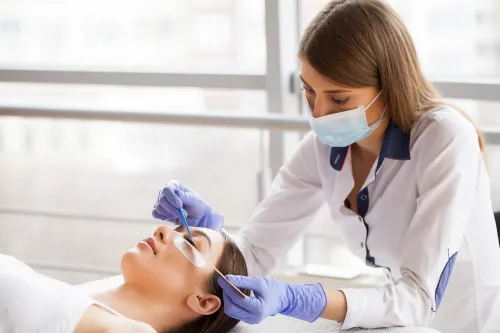
Cosmetic eyebrow, lip, or eyeliner pigments deserve extra caution. Iron oxide or titanium dioxide can turn grey, orange, red, or black after laser exposure, and some pigments darken instead of fading; request a test spot before treating the full area.
Sun exposure increases pigmentary problems, especially in Indian skin, so follow wound-care instructions and use sunscreen after the skin closes.
Seek prompt review for spreading warmth, pus, fever, severe pain, delayed healing, raised scars, or rapidly worsening pigmentation. A clinician should also reassess poor response before increasing laser energy.
What makes a pigmentation plan medically appropriate for Indian skin?
The diagnosis comes before a peel or laser. A clinician should determine whether the colour change is melasma, post-inflammatory hyperpigmentation, freckles, sunspots, acanthosis nigricans, vitiligo, medication-related pigmentation, or another disorder.
1. Take a history of onset, pregnancy or contraception, menstrual changes, medicines, sun exposure, itching, acne, eczema, burns, waxing, and previous procedures. Ask whether the patches darken after sunlight or follow inflammation.
2. Examine the pattern and texture. Symmetrical forehead, cheek, or upper-lip patches suggest melasma; marks after acne or injury suggest post-inflammatory hyperpigmentation. Freckles often appear in childhood and darken seasonally, while sunspots are discrete, persistent lesions. Thick, velvety darkening on the neck, armpits, or groin needs assessment for acanthosis nigricans and insulin resistance.
3. Check pale or completely depigmented areas under suitable lighting, using a Wood’s lamp when helpful, before labelling them vitiligo. A changing, bleeding, scaly, or irregular solitary spot needs medical review and sometimes biopsy rather than cosmetic treatment.
4. Record the Fitzpatrick skin type and inspect for recent tanning or active dermatitis. Darker skin has greater post-inflammatory hyperpigmentation risk after burns, peels, and lasers, so a pigmentation treatment in Nashik should use conservative settings, a test area, and adequate intervals.
5. Build prevention into treatment: broad-spectrum sunscreen, hat, protective clothing, and visible-light protection matter especially for relapsing melasma. Choose a female skin specialist in Nashik for privacy and communication if that helps you discuss hormonal or intimate concerns.
Is a best female dermatologist in Nashik worth choosing for this decision?
Choosing a female dermatologist is worth it when privacy and open communication will help you disclose details or follow treatment—not because gender proves better results. “Best female dermatologist in Nashik” is not a medical ranking; verify registration with India’s medical regulator and a recognised dermatology qualification such as MD, DNB, or DDVL.
| Factor | What to verify | Why it matters |
|---|---|---|
| Qualification | Medical registration plus MD, DNB, or DDVL in dermatology | Confirms specialist training |
| Tattoo expertise | Q-switched or picosecond laser, wavelength selection, and test-spot policy | Colour, depth, and cosmetic pigments affect response and burns |
| Pigmentation expertise | Experience with Indian and darker Fitzpatrick skin types | Inflammation can trigger post-inflammatory hyperpigmentation |
| Plan transparency | Sessions, spacing, improvement, downtime, alternatives, and total cost | Tattoo removal is gradual; guaranteed dates are not credible |
Ask these questions before consenting:
- Which diagnosis is being treated, and could tattoo ink and pigmentation require separate plans?
- What device and wavelength will you use for each ink colour?
- Will you test a small area, record the settings, and explain what happens if the skin darkens?
- What signs require urgent review, and who handles complications?
A female skin specialist in Nashik may make examinations of intimate areas or discussions about pregnancy, contraception, facial hair, and menstrual-pattern acne easier. That communication advantage matters, but it does not replace evidence of laser skill. Dr. Shreeya: Consultant Dermatologist should be assessed by the same registration, qualification, diagnosis, and safety questions.
Related services
Cosmetic Dermatology (Aesthetic Medicine) Tatto Removal And Skin Pigmentation Tatto Removal And Skin Pigmentation View service → |
Clinic Dermatology Treatment for Skin Pigmentation & Related Disorders Treatment for Skin Pigmentation & Related Disorders View service → |
Frequently asked questions
How can you tell whether darkness is tattoo ink, pigmentation, or both?
Ink usually remains inside the tattoo’s drawn shape. Pigmentation can spread beyond the design or follow irritation. Borders that do not match warrant assessment for both tattoo ink and a pigment disorder.
Which tattoo colours and laser wavelengths affect removal?
Black ink commonly responds to a 1064 nm Q-switched or picosecond laser. Red, orange, and some yellow pigments often need 532 nm light, while green and blue pigments may need 755 nm or 694 nm wavelengths. The correct choice depends on the ink mixture, depth, and your skin type.
What happens during tattoo removal, and which reactions need medical review?
The laser breaks ink into smaller particles, followed by temporary redness, swelling, or crusting. Arrange prompt medical review for spreading redness, pus, fever, severe or worsening pain, extensive blistering, or delayed healing.
What makes a pigmentation plan medically appropriate for Indian skin?
The clinician should identify the cause, examine your baseline skin tone, address triggers such as acne or irritation, and set a conservative treatment plan. Daily broad-spectrum sunscreen and controlled treatment reduce the risk of post-inflammatory hyperpigmentation.
Is choosing a female dermatologist in Nashik worthwhile for tattoo removal or pigmentation?
A female dermatologist in Nashik can be a worthwhile choice when you value a comfortable consultation and careful assessment. Prioritise medical registration, experience with Indian skin, appropriate laser equipment, treatment intervals, and a clear plan for complications over the provider’s gender alone.
Related services
Cosmetic Dermatology (Aesthetic Medicine) Dermapen For Skin Rejuvenation Acne Scarring, Stretch Marks, Pigmentation Dermapen For Skin Rejuvenation Acne Scarring, Stretch Marks, Pigmentation View service → |
Clinic Dermatology Vitiligo Management View service → |
Keywords