The right treatment depends on whether the unwanted colour is tattoo ink or an increase, loss, or change in your own skin pigment. By identifying the cause, location, colour, depth and behaviour of the mark, you can choose a safer treatment path and know what questions to ask before paying for a package.
Key takeaways
- Tattoo ink requires removal; excess skin pigment requires diagnosis and pigment care.
- Get a dark patch examined before booking cosmetic laser treatment.
- Laser wavelength, ink colour, skin tone and ink depth shape tattoo removal plans.
- Compare recovery, treatment sessions and relapse risk before choosing care.
Ink or Skin Pigment: What Exactly Are You Treating?
A mark needs tattoo removal when colour was deliberately placed into the skin; it needs pigmentation care when your skin produced excess or reduced pigment. Someone comparing tatto removal treatment or pigmentation treatment in Nashik should confirm that distinction before choosing a laser package.
| Clue | More consistent with tattoo ink | More consistent with skin pigment |
|---|---|---|
| Origin | Deliberately inserted ink | Melanin change after acne, eczema, sun exposure, hormones, medication, or injury |
| Pattern | A defined symbol, line, or filled design | A flat patch, speckling, or uneven facial darkening |
| Distribution | Follows the tattoo’s exact shape | Extends beyond one design or appears in several areas |
| Treatment target | Ink particles in the dermis | Excess melanin in the epidermis or dermis, after identifying its cause |
A dermatologist examines the colour, borders, location, depth, age of the mark, recent tanning, active inflammation, medicines, and any previous laser or peel. A tattoo can coexist with post-inflammatory pigmentation, especially after laser treatment, so a new brown or grey halo does not automatically mean the ink remains.
Do not treat a changing, bleeding, painful, scaly, or rapidly enlarging mark as routine pigmentation. Get a diagnosis first; dermatoscopy or a biopsy may be needed before cosmetic treatment.
When a Dark Patch Needs Diagnosis Before Cosmetic Treatment
A patch needs diagnosis before cosmetic treatment if it is changing, bleeding, crusting, painful, itchy, asymmetric, rapidly spreading, or unlike nearby marks. A new solitary dark spot deserves examination; so does a light patch that is sharply white, expanding, scaly, or inflamed. Colour alone cannot identify the cause.
| Pattern | More consistent with | Action |
|---|---|---|
| Both-sided brown facial patches | Melasma, often worsened by ultraviolet and visible light | Confirm the diagnosis and plan light protection |
| Marks over old acne, eczema, burns, or procedures | Post-inflammatory hyperpigmentation | Treat the trigger before targeting colour |
| A single dark lesion that changes, bleeds, crusts, or becomes raised | Mole or another lesion requiring examination | Arrange medical assessment; do not lighten it cosmetically |
| A rapidly expanding, sharply pale or white patch | Vitiligo or another pigment disorder | Seek diagnosis before applying lightening products |
| A scaly, wet, tender, or spreading patch | Infection or active inflammation | Treat the underlying condition first |
After laser, a darkened tattoo site can be post-inflammatory pigmentation rather than remaining ink. Adding more laser while inflammation is active can worsen the mark.
Before accepting skin pigmentation treatment in Nashik, ask:
- Has the clinician identified the pigment disorder?
- Is dermatoscopic examination or biopsy needed?
- What improvement is realistic, and how will recurrence be prevented?
- What is the plan if treatment makes the skin darker?
What Tattoo Laser Removal Involves—and Why Colour Changes the Plan
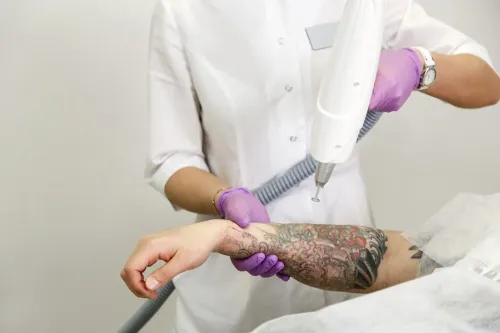
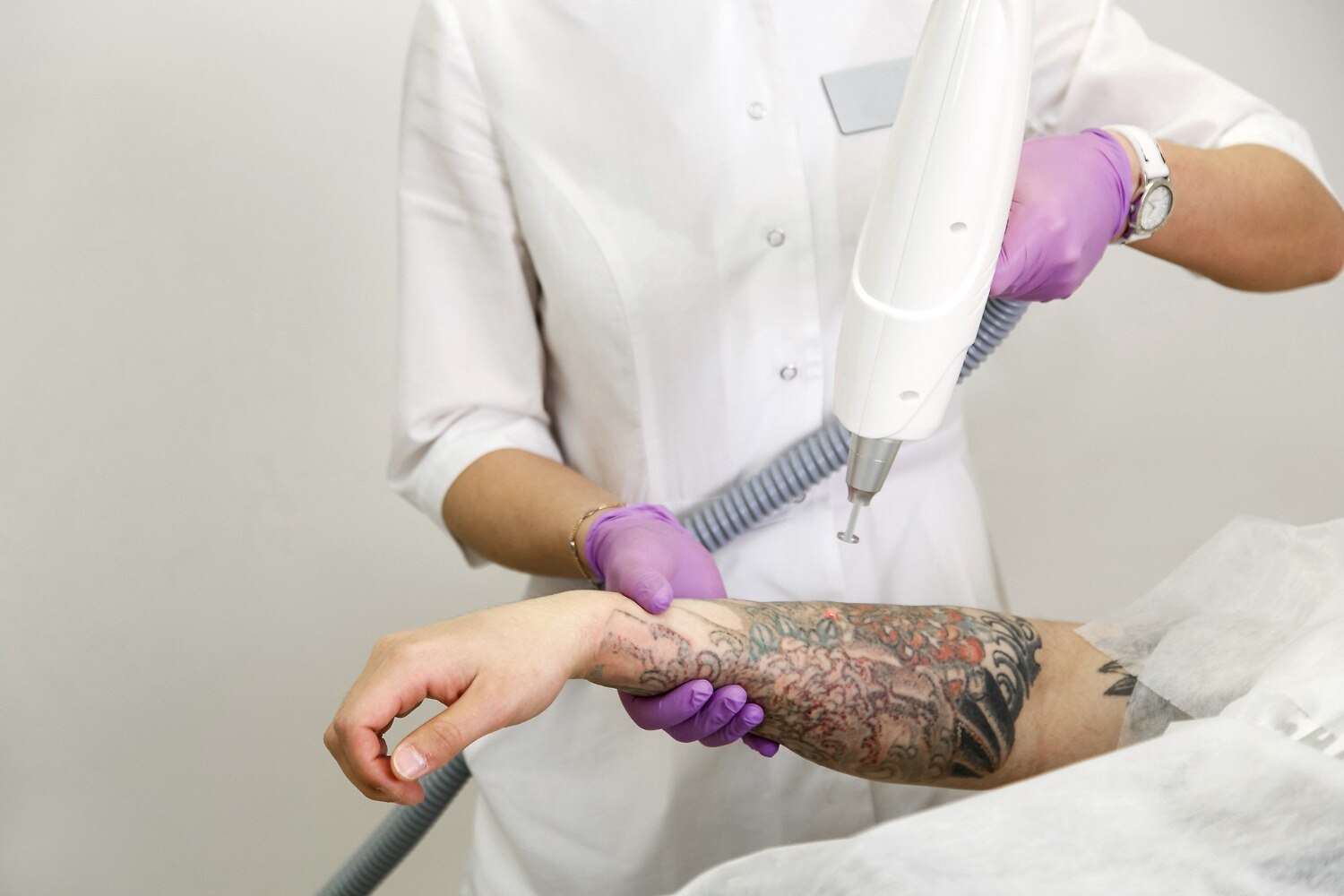
A tattoo laser session does not wash ink out in one visit. The laser breaks dermal ink into smaller particles, and your immune system clears them between appointments. The interval matters: treating inflamed skin too soon adds risk without giving the body time to remove more pigment.
Colour changes both the laser choice and the likely response. Black ink often responds more predictably, while green, blue, yellow, red, layered, dense, or professionally applied ink can need different wavelengths and more sessions. “Advanced” describes equipment, not a guaranteed session count.
Before choosing tatto removal treatment in Nashik, expect the clinician to assess:
- Ink colours, tattoo age, depth, density, and professional or amateur application
- Previous laser exposure, recent tanning, active eczema or infection, and medicines
- Your tendency to form keloids and your baseline skin tone
- Whether eyebrow or lip pigment contains iron or titanium compounds, which can darken or change colour under laser
Melanin absorbs laser energy too. On brown or darker Indian skin, the surrounding area can become temporarily lighter or darker, so conservative settings, sun protection, healing intervals, and a test spot can reduce risk without removing it. Complete clearance is not guaranteed, especially for multicoloured or layered tattoos.
Ask for a realistic range based on your ink, not a promise attached to the word “advanced.” If the mark is diffuse facial darkening, acne-related pigmentation, melasma, or a post-procedure patch, it needs a pigmentation diagnosis rather than a tattoo-removal package.
How a Dermatologist Decides Which Treatment Is Safe for Your Skin
A safe choice starts with the cause, not the package name. The dermatologist examines whether the colour is tattoo ink in the dermis or melanin linked to melasma, acne, sun exposure, medication, inflammation, or vitiligo.
A changing mole, infection, unusual scaling, or bleeding patch needs diagnosis before cosmetic treatment; dermatoscopy and, when indicated, a biopsy come before any laser or peel.
The consultation should record:
- Skin type, recent tanning, sun exposure, active acne, eczema, wounds, and previous reactions
- Tattoo colours, age, professional or amateur application, depth, cosmetic eyebrow or lip pigment, and previous laser sessions
- Keloid or thick-scar history, medicines, pregnancy status, immune problems, and treatments that increase light sensitivity
- The realistic improvement, healing interval, recurrence-prevention plan, and response if the area becomes darker
| Option | What the consultation must establish | When it fits |
|---|---|---|
| Laser | Target depth, pigment colour, conservative settings, test spot, and sun-protection plan | Confirmed tattoo ink or selected pigment lesions |
| Topical treatment | Cause of pigmentation and whether irritation could worsen it | Melasma, acne marks, or post-inflammatory pigmentation |
| Peeling | Stability of the skin, depth of pigment, and risk of post-inflammatory darkening | Carefully selected superficial pigmentation |
| Observation | Whether the mark is stable and safe to monitor | Mild, settling pigmentation or temporary darkening after treatment |
In brown or darker Indian skin, melanin also absorbs laser energy. A tattoo removal dermatologist in Nashik should discuss test spots, conservative settings, healing intervals, and strict light avoidance because these reduce risk without removing it. The same diagnostic standard matters when consulting Dr. Shreeya: Consultant Dermatologist; ask what happens if treatment causes darker skin.
Related services
Cosmetic Dermatology (Aesthetic Medicine) Tatto Removal And Skin Pigmentation Tatto Removal And Skin Pigmentation View service → |
Clinic Dermatology Treatment for Skin Pigmentation & Related Disorders Treatment for Skin Pigmentation & Related Disorders View service → |
Compare the Treatment Plan, Recovery Burden and Relapse Risk
Compare a written, diagnosis-led plan rather than a package label. Tattoo ink and excess melanin need different targets, settings and follow-up, especially in brown or darker Indian skin.
| Option | Treatment plan | Recovery burden | Relapse risk |
|---|---|---|---|
| Tattoo removal | Records ink colours, age, application type and prior laser; uses tattoo-specific laser assessment, with a test spot for cosmetic eyebrow or lip pigment | Redness, crusting and temporary darkening can occur; allow full healing between sessions and avoid picking or sun exposure | Ink is removed gradually, but residual ink, scarring or post-inflammatory pigmentation can remain |
| Pigmentation care | Names the cause—melasma, acne marks, sun damage, drug reaction or another disorder—and sets a prevention plan; dermoscopy or biopsy is considered when needed | Topicals, peels or lasers can irritate skin and worsen darkness if used aggressively; conservative settings and sun protection matter | Melasma and post-inflammatory pigmentation can return unless triggers, inflammation and ultraviolet exposure are controlled |
Before accepting a package from a pigmentation clinic in nashik, ask:
- What exact diagnosis has been made, and is dermatoscopy or biopsy needed?
- What improvement is realistic, and how many visits or healing intervals are expected?
- What sunscreen, light avoidance and home care are required?
- What is the plan if treated skin becomes darker, and who manages that complication?
Frequently asked questions
How do tattoo removal and pigmentation treatment differ?
Tattoo removal targets deliberately placed ink particles in the skin. Pigmentation care targets excess or reduced melanin produced by your skin, so the diagnosis and treatment plan differ.
When should a dark patch be diagnosed before cosmetic treatment?
Arrange a dermatology examination when a patch is new, changing, itchy, painful, bleeding, sharply uneven, or unlike your other marks. Do not assume every dark patch is pigmentation.
What affects the tattoo laser removal plan?
Ink colour, ink depth, tattoo age, tattoo size, layering, scarring and your skin tone affect the laser choice, treatment spacing and risk of temporary light or dark marks.
How does a dermatologist choose a safe treatment for pigmentation or tattoo ink?
The dermatologist reviews your history, examines the mark, identifies the likely pigment or ink, checks for active skin disease and selects treatment based on skin tone, location and the risk of colour change.
Which has greater recovery or relapse risk: tattoo removal or pigmentation care?
Tattoo removal usually requires multiple spaced sessions and can cause temporary redness, swelling or colour change. Pigmentation care can involve daily sunscreen and maintenance because the underlying trigger can return.
Related service
Cosmetic Dermatology (Aesthetic Medicine) Dermapen For Skin Rejuvenation Acne Scarring, Stretch Marks, Pigmentation Dermapen For Skin Rejuvenation Acne Scarring, Stretch Marks, Pigmentation View service → |
Keywords