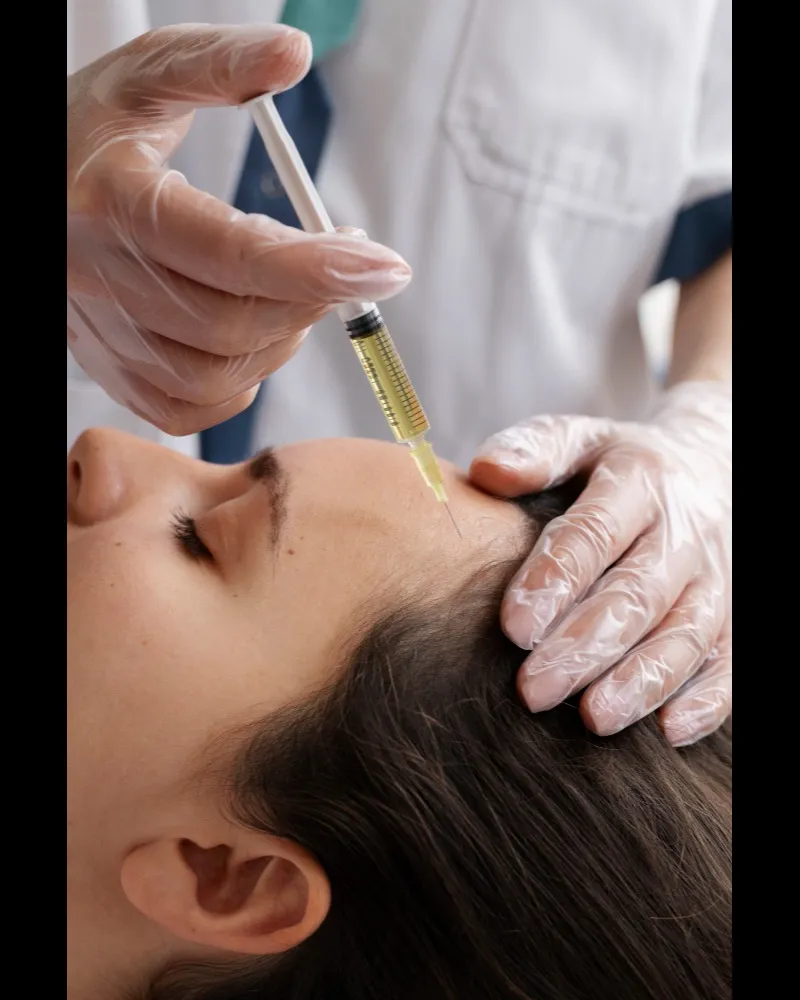
Platelet-rich plasma, commonly called PRP, is a procedure used in selected cases of hair loss. It uses a concentrated component prepared from the patient’s own blood, which is then administered into targeted areas of the scalp.
PRP treatment in Nashik is often discussed by people experiencing pattern-related thinning or reduced hair density. However, it is not suitable for every type of hair loss. A dermatologist must first determine whether the follicles are present and whether the underlying condition is likely to respond to the procedure.
Dr. Shreeya's SKIN 4You Clinic evaluates the scalp and hair-loss pattern before considering PRP as part of an individual treatment plan.
How the PRP Procedure Is Performed
Although protocols can vary, a typical session includes several stages:
- A small quantity of blood is drawn from the patient.
- The blood is placed in a centrifuge for separation.
- The platelet-rich portion is prepared for use.
- The scalp is cleaned and marked where necessary.
- PRP is administered into selected areas of thinning.
The procedure is generally completed during a clinic visit. Patients may experience temporary tenderness, redness, mild swelling, or sensitivity at the treated sites.
Who May Be Considered for PRP?
PRP may be discussed for certain patients with early or moderate pattern hair loss. It may also be considered as a supportive option alongside medical treatment when clinically appropriate.
Suitability can depend on:
- The diagnosed type of hair loss
- The duration and extent of thinning
- The condition of the scalp
- The presence of active follicles
- Current health and medication history
- Previous response to hair-loss treatment
- Expectations regarding improvement and maintenance
PRP is unlikely to replace a complete medical assessment. If shedding is associated with thyroid imbalance, nutritional deficiency, scalp disease, hormonal changes, or recent illness, those factors may also need attention.
How Many Sessions Are Required?
There is no single schedule that applies to everyone. Dermatologists may initially recommend a series of sessions followed by periodic maintenance, depending on the diagnosis and response.
Hair growth follows a slow biological cycle. Changes in shedding, thickness, or density may take time to assess. Progress is better monitored through standardised photographs and clinical review than through day-to-day observation.
PRP cannot guarantee complete regrowth, and results vary among patients. The condition may still require topical or oral medication as part of the overall plan.
Care Before and After Treatment
Patients should inform the dermatologist about medicines, supplements, bleeding disorders, active infections, pregnancy, and ongoing health conditions. Medicines should not be stopped without medical advice.
After a session, the dermatologist may recommend avoiding vigorous scalp rubbing, harsh chemical treatments, excessive heat, or strenuous activity for a specified period. Mild discomfort is possible, but unusual swelling, prolonged pain, or signs of infection should be reported.
For patients in Nashik and nearby areas of Maharashtra, practical considerations include the number of recommended visits, travel time, follow-up availability, and maintenance requirements. Understanding the complete plan helps patients evaluate the commitment involved.
PRP is best viewed as one possible component of hair-loss management rather than a universal solution. Its value depends on correct diagnosis, suitable patient selection, careful administration, consistent follow-up, and realistic expectations.
Keywords